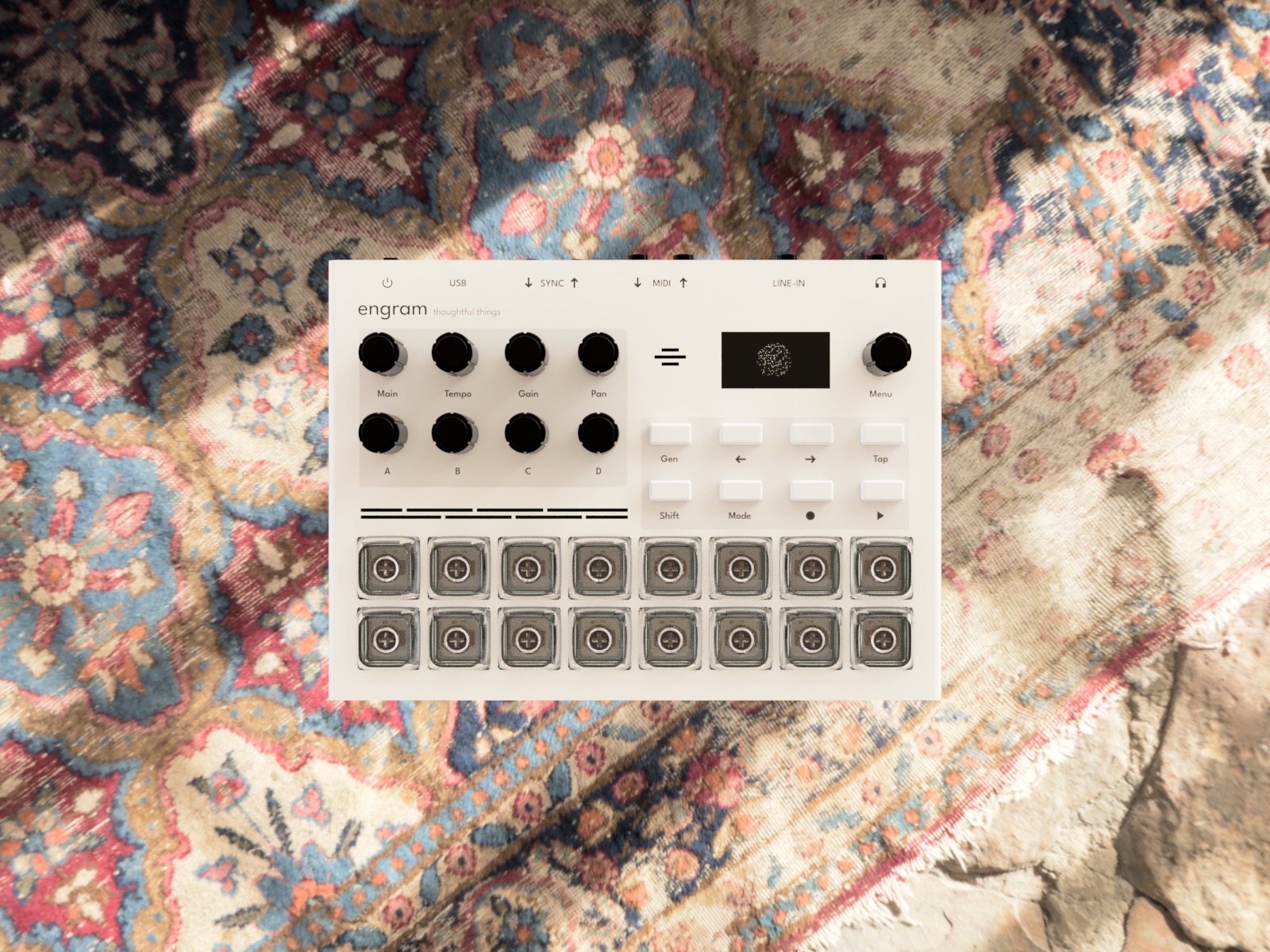
engram
generative audio samplerEngram combines a traditional sampler-groovebox workflow with hands-on sample generation using audio model bending – like circuit bending, but for neural networks. Take control of Engram’s unique model bending parameters to push tiny audio models beyond their limits and discover expressive, uncanny new sounds to sample. Then slice, flip, and manipulate your samples to fit your creative process.
No internet connection, app, or subscription service is required: everything runs on the Engram’s hardware.
These sounds do not exist. But you do.
Key Features
- Neural audio processing – process and warp your own recordings with an embedded neural audio codec
- Sample generation – create and glitch short bursts of audio to sample and manipulate
- Model bending – unique, tweakable features for glitchy neural audio processing
- Pluggable audio models – create, share, and plug-in new audio models to experiment with, just like old-school ROMplers
- Sample and pattern storage and recall
- MIDI input and output
- CV sync/gate input and output
- Stereo line-level input for sampling
- Headphone output
- On-board microphone for lo-fi sampling and voice control
Demos
Note: This is a research prototype. Design may change.
Purchase

We’re live on Kickstarter with a limited number of discounted Engram units available for early backers.
Press


Updates
Sign up to be notified of updates.
FAQ
Does Engram use AI?
Yes, Engram uses a tiny AI engine that runs directly on the hardware, which is a lot different than the big AI you’re familiar with.
You’ve probably used tiny AI before. It quietly powers things like stem separation in DAWs, exercise tracking on smart watches, and autocorrect on phones.
Chatbots are big AI. Engram is tiny AI.
What's the difference between tiny AI and big AI?
-
You own your creative process: Tiny AI doesn’t claim to be “superintelligent”. It’s designed for small tasks. On Engram, we use a tweakable tiny AI engine to generate happy accidents of sound, and to warp, blend, and extend your recordings in unpredictable ways. It’s expressive enough to add a dose of inspiration to your process, but you maintain creative control.
-
Low environmental impact: Unlike big AI, tiny AI is small enough for us to train on computers like gaming PCs – no massive data centers required. Once trained, it runs right on Engram’s hardware on your desk. Peer-reviewed scientific research has shown that the carbon impact of training tiny AI models is minimal.